• UGM
  • IT Center
  • English
    • Bahasa Indonesia
    • English
Universitas Gadjah Mada Center for Health and Human Nutrition
Universitas Gajah Mada
  • Home
    • Activity Calendar
    • Upcoming Events
    • News
  • About CH2N
    • Profile
    • Vision and Mission
    • Organizational Structure
    • Researchers
    • Our Contacts
  • Activities
    • Research
    • Community Service Programs
    • Trainings
    • Publication
  • Collaborations
    • Companies
    • Governments
  • Gallery
    • Photos
    • Videos
    • Posters
  • Home
  • Balanced Nutrition During a Pandemic
  • Balanced Nutrition During a Pandemic
Arsip:

Balanced Nutrition During a Pandemic

Monitoring Body Weight During Pandemic

Education Sunday, 11 April 2021

Malnutrition refers to deficiencies, excesses, or imbalances of someone’s energy and/or nutrients intake. It’s divided into 2 broad groups of conditions, i.e. undernutrition and overnutrition. Monitoring body weight regularly could help to maintain normal body weight and prevent malnutrition.

Based on World Health Organization, obesity is defined as excessive fat accumulation that presents a higher risk of comorbidity and mortality. Comorbid can affect someone’s quality of life. Some of those comorbid risks are:

  • Cardiovascular disease,
  • Digestive disorder,
  • Type 2 diabetes mellitus,
  • Respiratory disorder,
  • Sleeping disorder, and
  • Psychological disorder.

Weight loss in obese patients can significantly improve health and reduce the risk of developing comorbid diseases. The recommended weight loss is 0.5-1 kg/week. Extreme weight loss is not recommended because it can lead to health problems such as gallstone formation, dehydration, decreased muscle mass, metabolic disorders, and micronutrient deficiencies.

Similar to obesity, undernutrition can also cause health problems and an increased risk of mortality, especially in infants and children. Undernutrition can cause delays in children’s growth and development. Undernutrition can also cause other health problems, such as:

  • Reduced muscle mass and fat-free mass,
  • Decreased immune system and increased risk of disease infections,
  • Decreased bone mass,
  • Anemia,
  • Vitamin deficiency,
  • Fertility disorders and pregnancy problems,
  • Digestive disorders,
  • Slower wound healing,
  • Psychological disorders, and
  • Sleeping disorders.


References:

Karmacharya, P., Shrestha, G.L., Singh, S., & Shrestha, O.K. (2019) Relation of Waist Hip Ratio and BMI with the Vital Capacity. Journal of Chitwan Medical College, 9(29), pp. 51-55

Kementerian Kesehatan RI (2014) Pedoman Gizi Seimbang. Jakarta: Kementerian Kesehatan RI.

Sharon, M.F. (2017) Obesity: Risk Factors, Complications, and Strategies for Sustainable Long-Term Weight Management. Journal of the American Association of Nurse Practitioners, 29(Suppl 1), pp. S3-S14.

Uzogara, S.G. (2016) Underweight, the Less Discussed Type of Unhealthy Weight and Its Implications: A Review. American Journal of Food Science and Nutrition Research, 3(5), pp. 126-142.

World Health Organization (2020) Malnutrition. [Online] Available at: https://www.who.int/news-room/q-a-detail/malnutrition [Accessed: March 31, 2021].


Author: Stefanie Intan Budi Astuti
Physical Activity During Pandemic

Education Sunday, 11 April 2021

Because of COVID-19 pandemic, social activities are restricted. People work from home, so our daily physical activities are minimal. For example, we just sitting for hours in front of a computer or laptop. However, physical activity needs to be done at least 30 minutes, routinely 3-5 times a week (Ministry of Health, 2020).

According to the Community Promotion and Empowerment Section (2020) physical activity, including exercise, are needed to:

  1. Reduces anxiety
  2. Control stress
  3. Control cholesterol levels
  4. Improve joint flexibility and muscle strength
  5. Increase endurance and the immune system

We need to do regular physical activity to improve physical fitness, maintain ideal body weight, and prevent obesity (Promotion and Community Empowerment Section, 2020). In carrying out daily activities during a pandemic, we need to stretch every two hours for 10-15 seconds. Besides, we also need to regularly drink water to avoid dehydration and avoid smoking (Abdulloh, 2020)

In exercising during a pandemic, according to Abdulloh (2020), there are general principles that must be applied, such as:

  1. Frequency (minimum 2-3x per week)
  2. Duration (minimum 30-45 minutes)
  3. Intensity (moderate intensity)
  4. Type (aerobic, muscle strength training, flexibility training)

In exercising during COVID-19 pandemic, some of the things that we can do are walking or running around the house while performing health protocols. We can also watch and follow exercise videos. High-intensity exercise is not recommended because it can lower immunity and increase the risk of respiratory infections. It is also not recommended to exercise that involves physical contact with other people, such as basketball, soccer, and volleyball (Elysia, 2020).

Some examples of sports recommended during the pandemic are aerobic exercise, muscle strength training, and weight training. Aerobic exercises include brisk walking, dancing, and jumping rope. We can do squats, push-ups, and sit-ups for strength training. Weightlifting exercises can be used using tools or the body. Besides, pilates, yoga, and gymnastics are also sports choices that are widely practiced during the pandemic (Setyaningrum, 2020)

In addition to sports, physical activity that we can do is walk at least 10,000 steps per day, doing household chores, gardening, and go up and down stairs (Yuliana, 2020). To support the physical activity, we need to get adequate and regular rest, for 6-8 hours per day. Also, we need to sunbathing for at least 15 minutes per day. When sunbathing, it would be better if we use light-colored clothes, hats and glasses, and sunblock (Ministry of Health, 2020).


References:

Abdulloh, I., N., 2020. Sports Mistakes During the COVID-19 Pandemic. URL: https://www.uny.ac.id/sites/www.uny.ac.id/files/u10/kesALAH%20olga.pdf. Retrieved March 26, 2021.

Elysia, V. 2020. The Role of Nutrition in Anticipating the Covid-19 Pandemic. URL: https://fk.ugm.ac.id/peran-gizi-dalam-mengantisipasi-pandemi-covid-19-2/. Retrieved March 26, 2021.

Ministry of Health. 2020. Guidelines for Balanced Nutrition during the Covid-19 Period. Jakarta: Ministry of Health of the Republic of Indonesia.

Promotion and Community Empowerment Section. 2020. Keeping Healthy and Fit during the Pandemic with Balanced Nutrition. URL: https://k Kesehatan.jogjakota.go.id/berita/en/214/menjaga-tetap-sehat-dan-bugar-di-masa-pandemi-dengan-gizi-seimbang/. Retrieved March 26, 2021.

Setyaningrum, D.A.W., 2020. The importance of exercise during the COVID-19 pandemic. Journal of Biomedicine and Health, 3 (4), pp. 166-168.

Yuliana, Y., 2020. Safe Exercise during the COVID-19 Pandemic to Increase Immunity. Journal of Bali Developing Bali, 1 (2), pp.103-110.


Author: Fairuz Khairunnisa Anasyua

Clean Living Habits During Pandemic

Education Sunday, 11 April 2021

Infectious diseases are one of the factors that affect a person’s nutritional status, both children and adults. Nutritional status has an influence on the immune system and the healing process. A person with a poor or even poor nutritional status is more at risk of developing various diseases and the healing time tends to be slower. Someone who is infected with an infectious disease needs more nutritional intake but has a problem, namely a decreased appetite. This can lead to weight loss and worsening nutritional status (Putri,2015).

Infectious diseases are also a common health problem in developing countries, including Indonesia. One of the causes of infectious disease is the lack of clean and healthy living habits in the family or home environment. Clean and healthy living behavior (PHBS) itself is a health behavior that is carried out with awareness so that family members can help themselves in the health sector and can play an active role in activities in the community. The implementation of PHBS is also an effort to transmit experiences regarding healthy living behaviors through individuals, groups, or communities using various communication channels as a medium for sharing information (Depkes, 2011). In broad terms, PHBS includes a movement to get used to healthy living behaviors. During this pandemic, clean living habits have become a necessity to minimize the risk of being infected with COVID-19. Not only that, but clean living habits can also prevent us from being infected with other infectious diseases. By adopting a clean and healthy lifestyle, our nutritional status and health will always be maintained.

For that, we need to adopt a clean and healthy lifestyle during this pandemic to prevent various transmissions from infectious diseases. World Health Organization (2021) suggest some behaviors we need to implement include:

  1. Wash your hands using soap and running water regularly
  2. Using the mask properly
  3. Avoid touching parts or areas of the face
  4. Cover mouth and hood using a tissue or the inside of the elbow when coughing or sneezing
  5. Clean and disinfect frequently touched surfaces, such as door handles, tables, chairs, cell phones, light switches
  6. Keep your distance and avoid crowds
  7. Ensure good air circulation

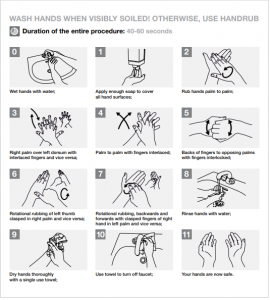
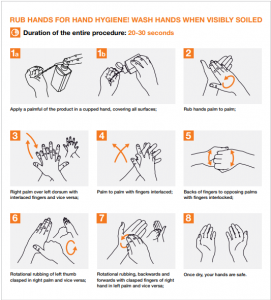
One of the clean and healthy living behaviors that we need to do is wash our hands. Washing hands needs to be done after coughing or sneezing, after using the toilet, after traveling outside, before preparing food, before eating, and when you feel your hands are dirty. Here are the steps to wash your hands properly (WHO, 2009):

(washing hands using a hand sanitizer’s guide)

(washing hands with soap and water’s guide)

In addition, clean and healthy living habits can be done by handling food ingredients properly so that the food we consume is guaranteed cleanliness. The following are various ways of handling food ingredients as a form of clean and healthy living habits (United Nations Children’s Fund, 2020), including:

– Wash hands before handling and preparing food

– Distinguish raw meat and fish cutting boards from vegetables and fruits to prevent cross-contamination

– Washing food, especially fruits and vegetables with clean running water

– Processing food at the appropriate temperature

– Store perishable foods in the refrigerator, check their expiration date periodically

– Use clean and dry cooking utensils and utensils

– Transferring food from outside to clean plates

– Dispose of food packaging in a closed trash can

– Clean the can with a clean cloth wrapper before opening it


References:

Departemen Kesehatan RI (2011) Pedoman Pembinaan Perilaku Hidup Bersih dan Sehat (PHBS). Jakarta:Depkes RI

Kementerian Kesehatan RI (2014) Pedoman Gizi Seimbang. Jakarta: Kementerian Kesehatan RI.

Putri, M. S., Kapantow, N., & Kawengian, S. (2015). Hubungan antara riwayat penyakit infeksi dengan status gizi pada anak batita di Desa Mopusi Kecamatan Lolayan Kabupaten Bolaang Mongondow. eBiomedik, 3(2).

United Nations Children’s Fund (2020) Cleaning and Hygiene Tips to Help Keep the COVID-19 Virus Out of Your Home. [Online] Available at: https://www.unicef.org/ [Accessed: April 1, 2021].

World Health Organization (2021) Coronavirus Disease (COVID-19) Advice for the Public. [Online} Available at: https://www.who.int/ [Accessed: April 1, 2021]

World Health Organization [2009) Hand Hygiene: Why, How & When? [Online] Available at: https://www.who.int/ [April 1, 2021]


Author: Fina Cahya Hasanah

Consumption of Various Foods During Pandemic

Education Sunday, 11 April 2021

We really need a variety of foods because there is no single type of food that contains complete nutrition except breast milk. For example, rice is a major source of calories, but is poor in vitamins and minerals; vegetables and fruits are generally rich in vitamins, minerals, and fiber, but poor in calories and protein; fish is a major source of protein but few calories. Therefore, consuming a variety of foods is absolutely necessary for us to keep our bodies healthy.

In the principle of consuming diverse foods, the proportion of food consumed must also be considered so that it is balanced, in sufficient quantities, not excessive, and carried out regularly. The variety of foods in balanced nutrition is clearly shown in the ”tumpeng gizi seimbang” or Healthy Food Pyramid. “Tumpeng Gizi Seimbang” consists of several tumpeng pieces: one large slice, two medium pieces, two small pieces, and at the top there are the smallest pieces. The width of the tumpeng pieces indicates the portion of food that each person should consume per day.

Did you know that consuming a variety of foods is also very beneficial for the body during a pandemic like this? Various nutrients contained in various foods that we consume have benefits to increase our immunity in the face of this pandemic. Here’s an easy way to find out the benefits of the food we consume based on its color :

  1. Fruits
    1. Red fruits contain lots of vitamin C and flavonoids. Red fruit is useful for lowering blood cholesterol levels and maintaining liver health. Examples of these fruits are apples, tomatoes, grapes, etc.
    2. Yellow and orange fruits contain lots of vitamin A and carotene. This substance is useful for improving eyesight, besides that it also contains many antioxidants that can boost immunity. Examples of these fruits are bananas, oranges, papayas, mangoes, etc.
    3. Green fruits have various kinds of vitamins that are useful for increasing body immunity and inhibiting the growth of cancer cells. Examples of these fruits are Malang apples, green grapes, melons, etc.
    4. Purple and blue fruits when the color gets darker, the more vitamin content, this fruit is useful for maintaining the health of the heart, blood vessels, and inhibiting the growth of cancer cells. Examples of these fruits are Pomegranate, purple sweet potato, blueberry, etc.
  2. Vegetables
    1. Green vegetables are a good source of carotene for antioxidants. The greener the color, the more carotene, vitamin C, folic acid, and minerals it contains. Examples of these vegetables are cassava leaves, mustard greens, spinach, beans, etc.
    2. Purple vegetables contain lots of antioxidants and vitamins. Natural purple color is useful for increasing immunity, protecting brain damage, and increasing the production of red and white blood cells. Examples of these vegetables are purple eggplant, purple cabbage, etc.
    3. Yellow and orange vegetables contain various vitamins and antioxidants. This vegetable is useful for improving the health of the sense of sight. Examples of these vegetables are carrots, pumpkin, corn, etc.
    4. Red vegetables contain antioxidants that are useful for protecting blood vessels, heart health, and preventing cancer. Examples of these vegetables are red spinach and red radish
    5. White vegetables are vegetables that are not pigmented but still provide benefits to the body. These vegetables contain vitamin E, calcium, and allicin substances which can control cholesterol levels, blood pressure, and inhibit the growth of cancer cells. Examples of these vegetables are bean sprouts, cauliflower, chicory, etc.


References

Kementerian Kesehatan. 2014. Panduan Gizi Seimbang. Jakarta: Kementerian Kesehatan RI.

Kementerian Kesehatan. 2020. Panduan Gizi Seimbang pada Masa COVID-19. Jakarta: Kementerian Kesehatan RI.

Seksi Promosi dan Pemberdayaan Masyarakat. 2020. Menjaga Tetap Sehat dan Bugar di Masa Pandemi dengan Gizi Seimbang. URL: https://kesehatan.jogjakota.go.id/berita/id/214/menjaga-tetap-sehat-dan-bugar-di-masa-pandemi-dengan-gizi-seimbang/. Diakses pada tanggal 26 Maret 2021.


Author: Dwiki Rendy Dolado

Latest News

  • Prevention of Anemia in Adolescents
  • Get to Know About Anemia
  • Maintaining Healthy Diets during Eid Al-Fitr
Universitas Gadjah Mada

Center for Health and Human Nutrition (CH2N)

Litbang FK-KMK Building, 3rd floor, Medika Sendowo Street, Sinduadi, Mlati, Sleman, Special Region of Yogyakarta 55281

Telp./Fax. (0274) 547775

Email: ch2n.fk@ugm.ac.id

© CH2N-FKKMK UGM 2021

KEBIJAKAN PRIVASI/PRIVACY POLICY